THE ANIMALS BEHIND THE ART
TEN SPECIES. TEN FACTS. TEN REASONS THS SERIES EXISTS.
These are the animals I paint. Not because they are the most famous, or the most photographed, but because they are disappearing and most people don't know their names.
Every fact on this page stopped me when I first read it. I hope at least one of them stops you too.
Art is the lens. Conservation is the reason.
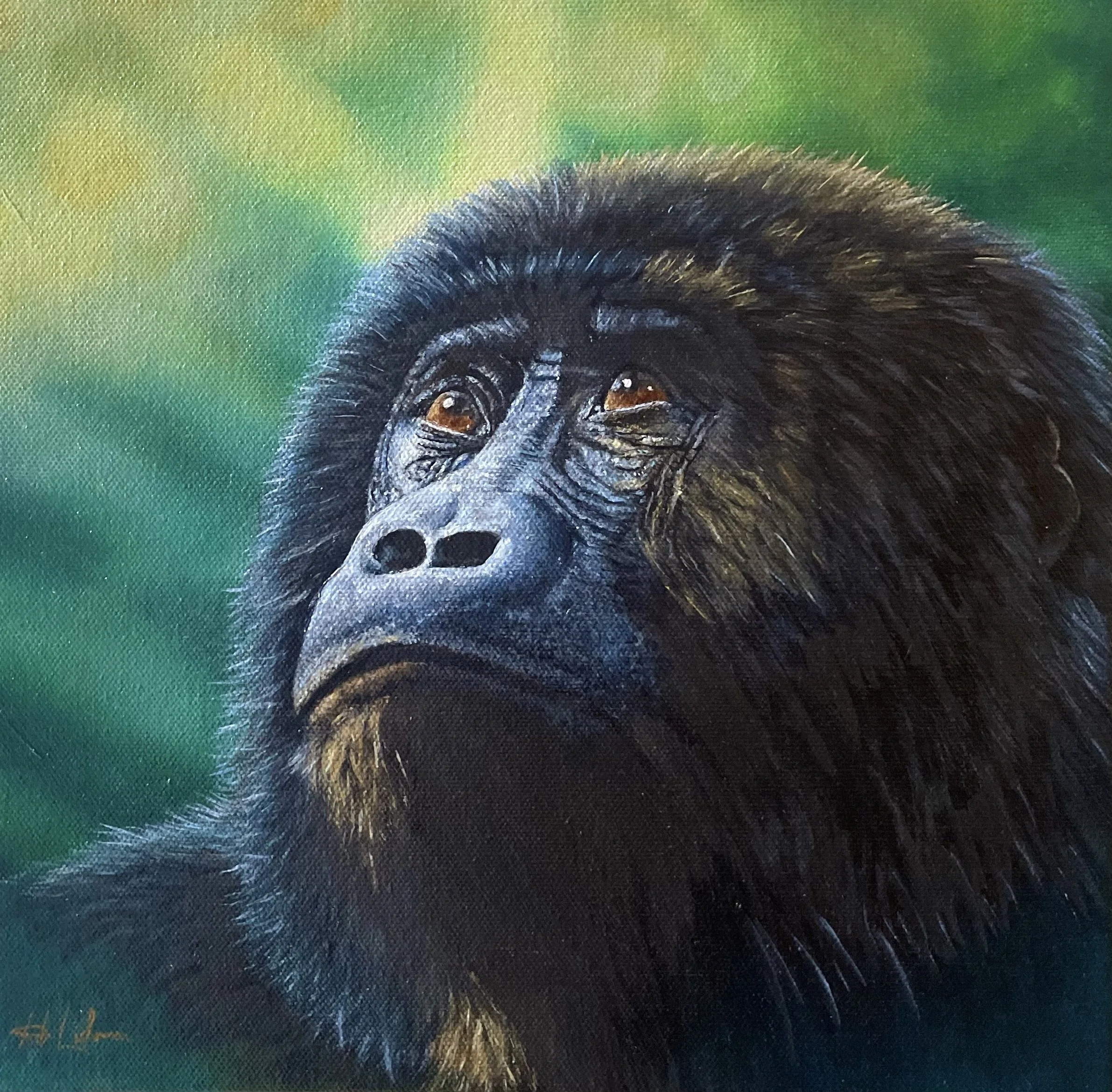
Emerald Legacy
EASTERN LOWLAND GORILLA
Gorillas have unique nose prints. Just as humans have fingerprints, no two gorillas share the same pattern of wrinkles on their nose. Researchers use these to identify individuals in the wild. Every animal counted in conservation surveys is known by name.
LEARN MORE
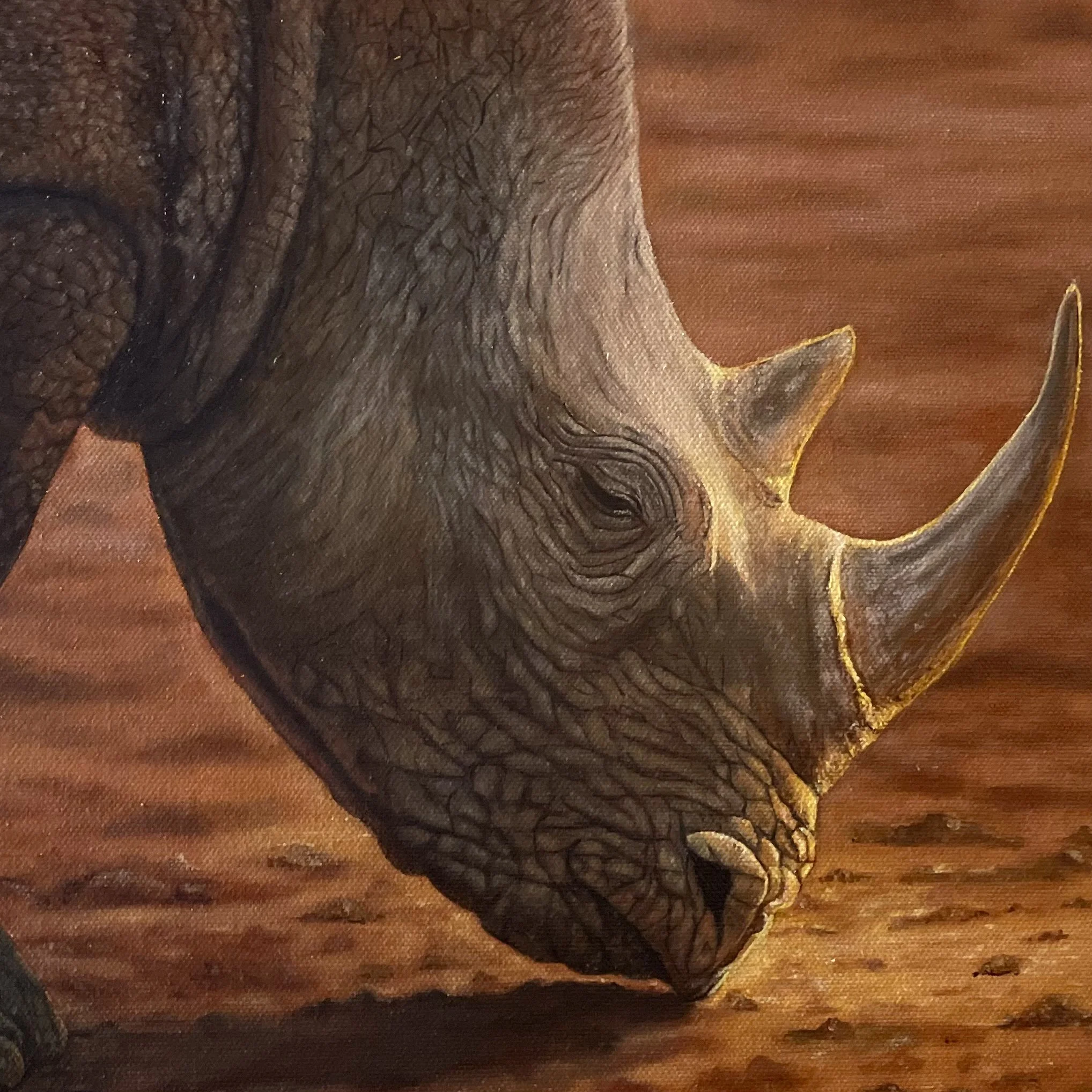
Final Charge
BLACK RHINO
A black rhino's horn is made of keratin - the same protein as human fingernails. It will grow back if removed, and yet rhinos are still killed for it. The horn has no proven medicinal value, but commands prices higher than gold on the black market.
LEARN MORE
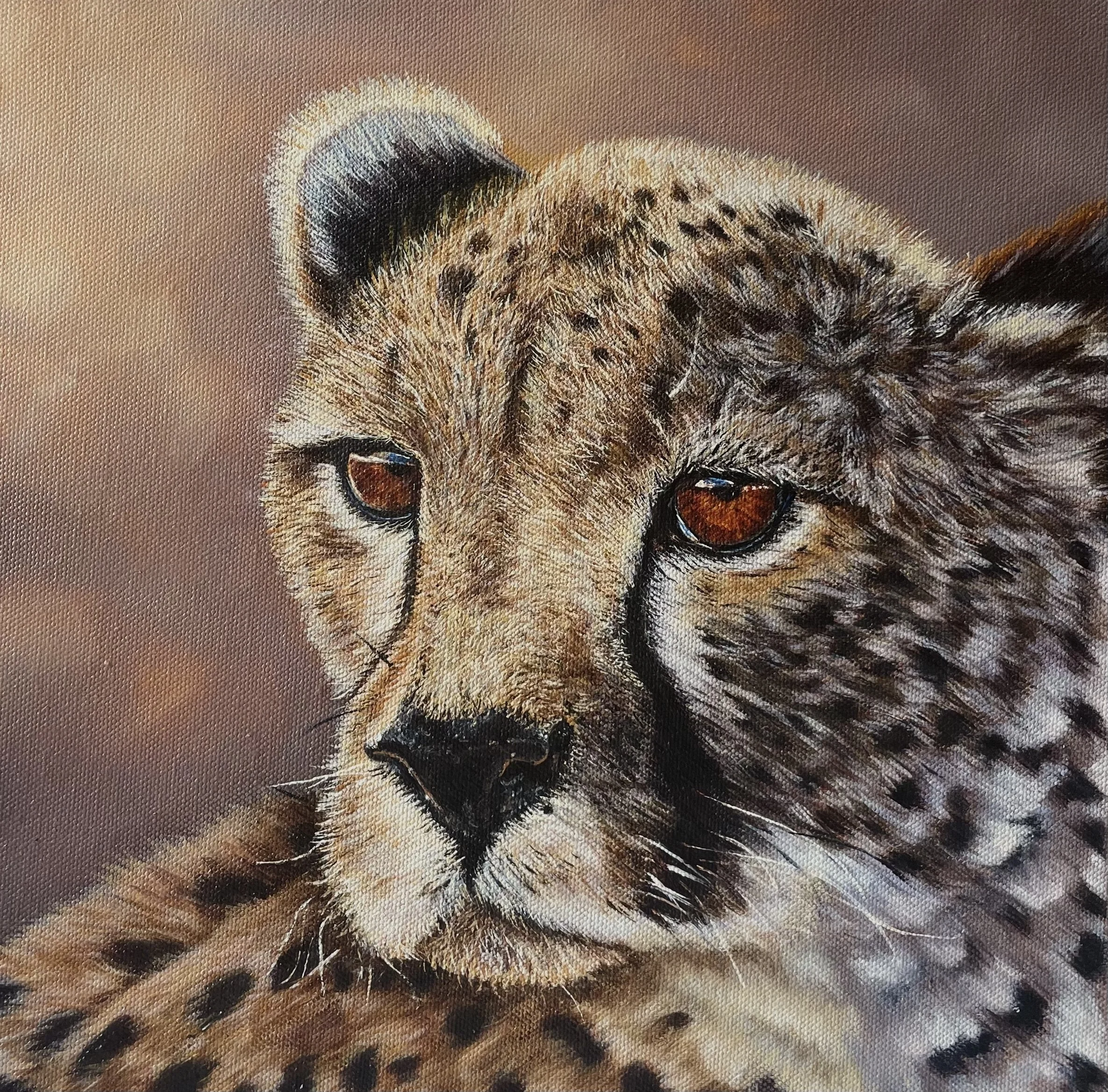
Ghosted Plains
CHEETAH
Cheetahs are the only big cat that cannot roar. Instead they purr, chirp, and make a sound called a 'churr', a bird-like stuttering call used to communicate with cubs. They are also the only cat that cannot retract its claws fully, which gives them grip when sprinting at 70mph.
LEARN MORE
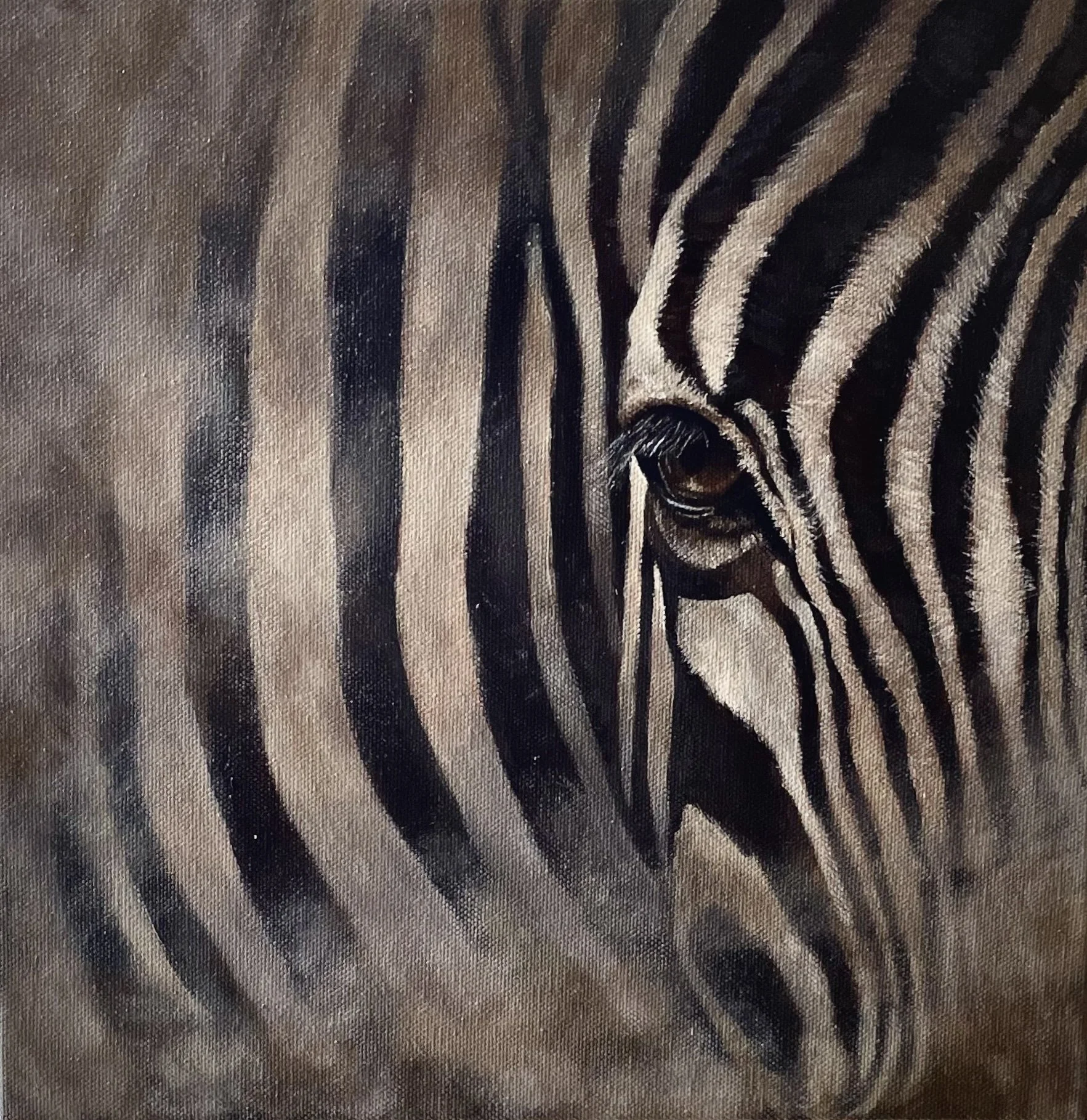
Mirage Stripes
GREVY’S ZEBRA
A Grevy's zebra foal must learn its mother's individual stripe pattern within the first few days of life before it can see other zebras, so it doesn't get confused in the herd. The stripes on a Grevy's are so narrow and numerous they are entirely unique, like a barcode no other animal shares.
LEARN MORE
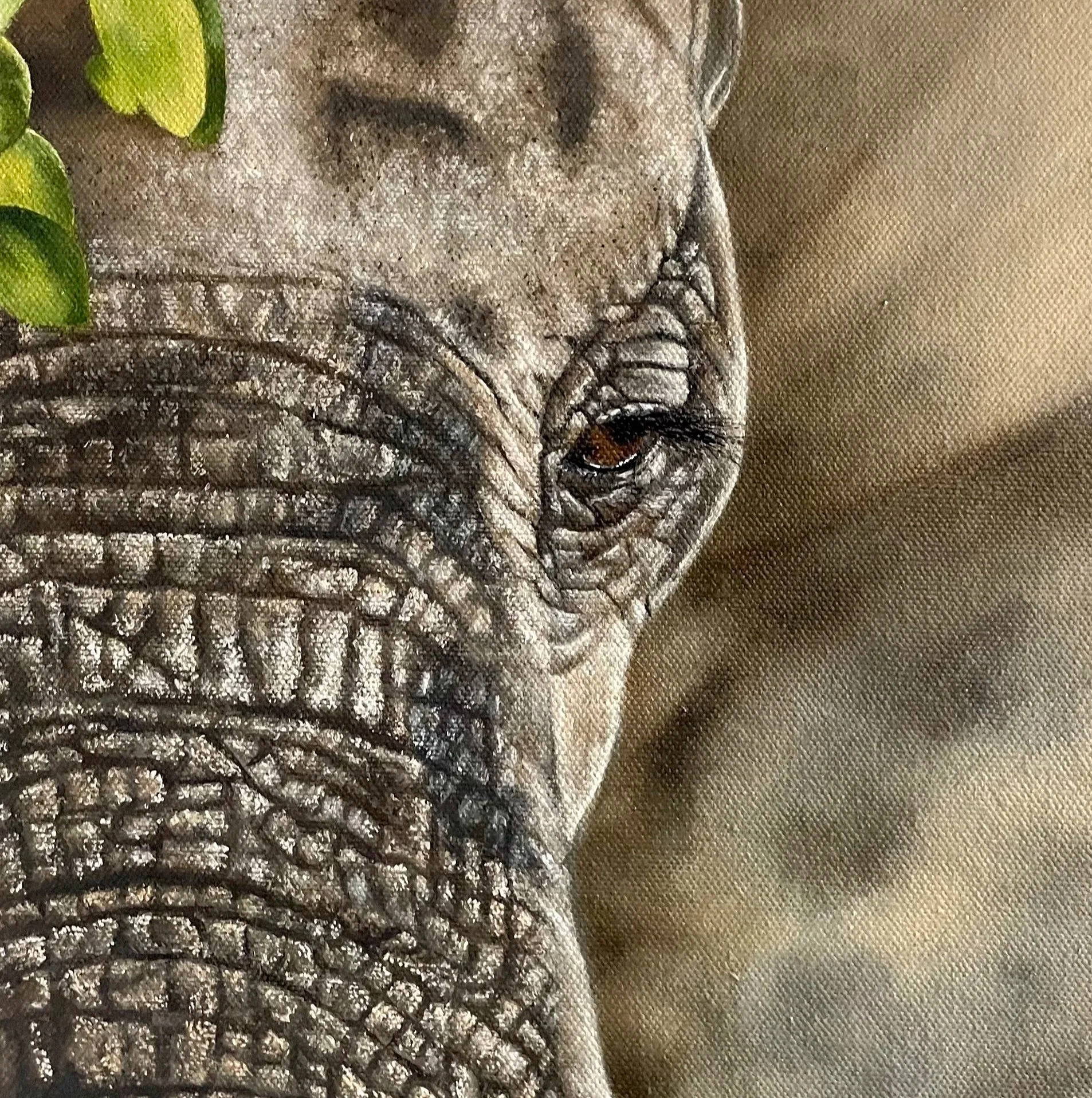
Ivory Canopy
AFRICAN FOREST ELEPHANT
Forest elephants are ecosystem engineers, they create clearings in dense jungle by pushing over trees, which lets light reach the forest floor and allows other plants to grow. Scientists estimate that without forest elephants, the Congo Basin rainforest would look fundamentally different. They shape the landscape just by moving through it.
LEARN MORE
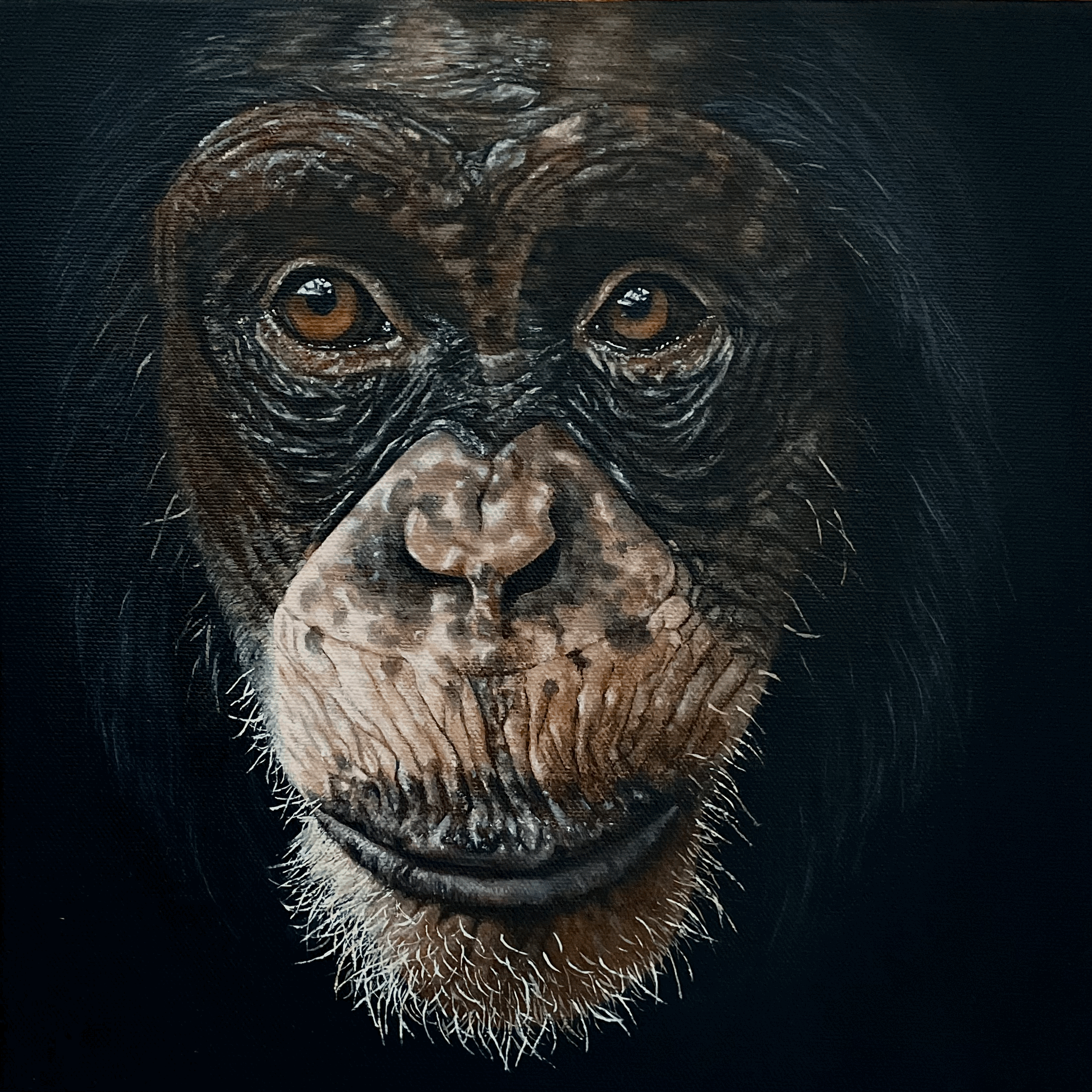
Kindred Souls
CHIMPANZEE
Chimpanzees have been observed making and using at least 20 different types of tools in the wild. From sticks to fish termites out of mounds, to stones used as hammers to crack nuts. Different chimp communities have developed different tool traditions, passed down through generations. This is culture. Not instinct.
LEARN MORE
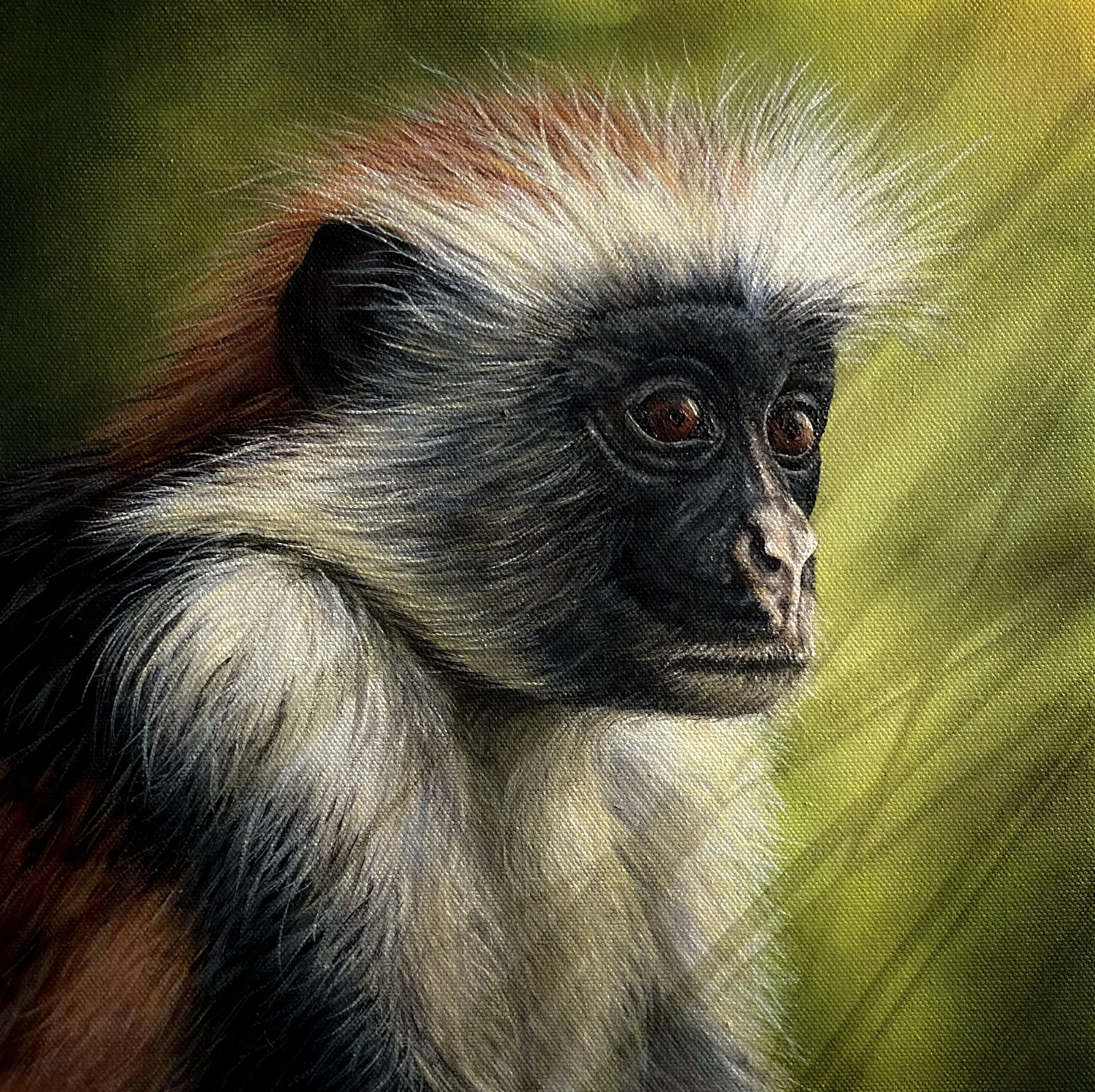
Crimson Treetops
RED COLOBUS MONKEY
Red colobus monkeys have a unique four-chambered stomach that allows them to safely digest leaves that would be toxic to most other primates. This adaptation makes them ecological specialists, but also makes them among the first to disappear when their specific forest habitat is destroyed. They cannot adapt. They can only stay or vanish.
LEARN MORE
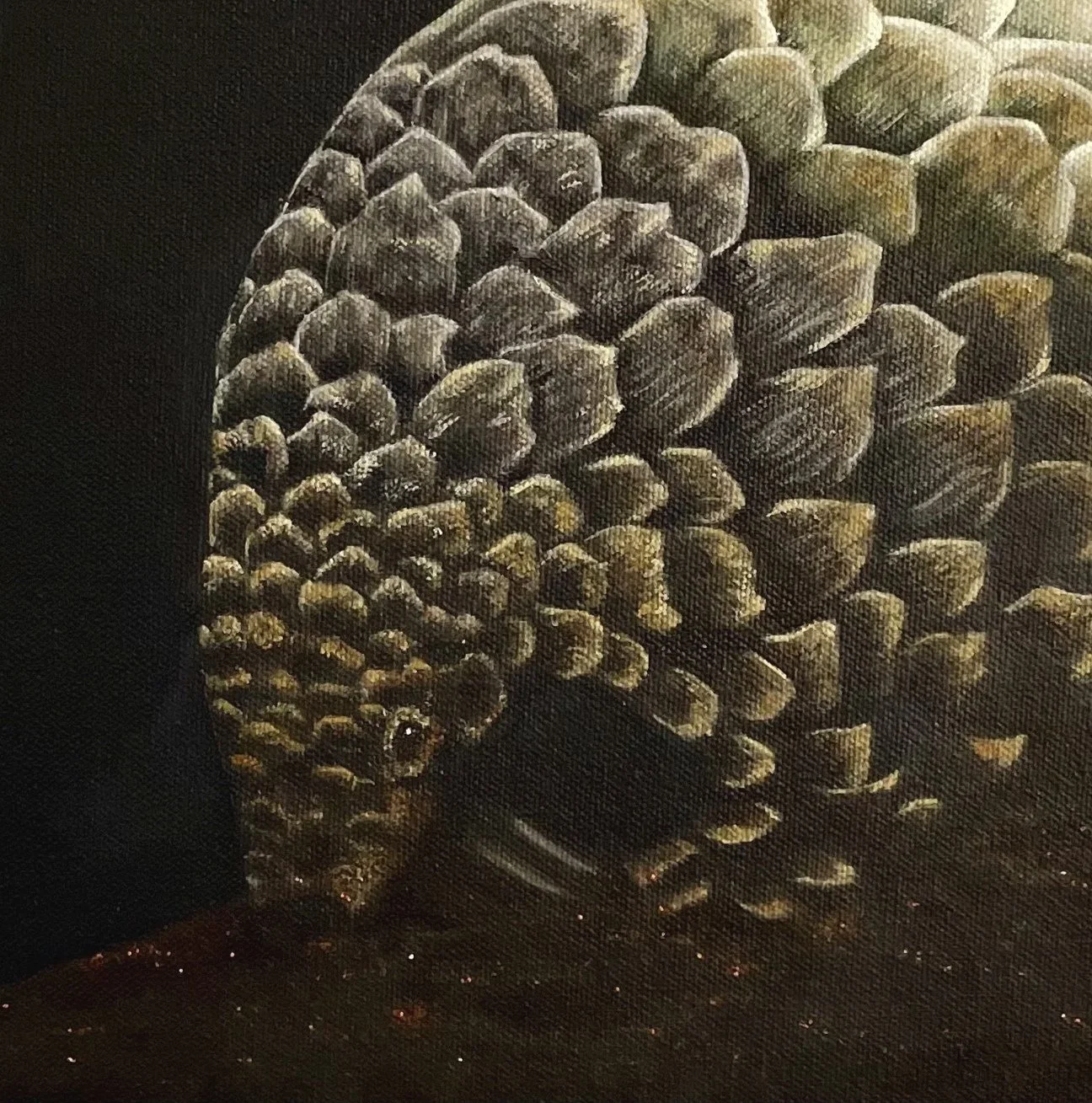
Last Defence
PANGOLIN
When threatened, a pangolin rolls into a perfect ball, protecting its soft belly with its armoured scales. This defence has worked for 80 million years, against every predator on Earth. It is completely useless against a human with a net. Pangolins are so easy to catch that a single poacher can collect dozens in a night.
LEARN MORE
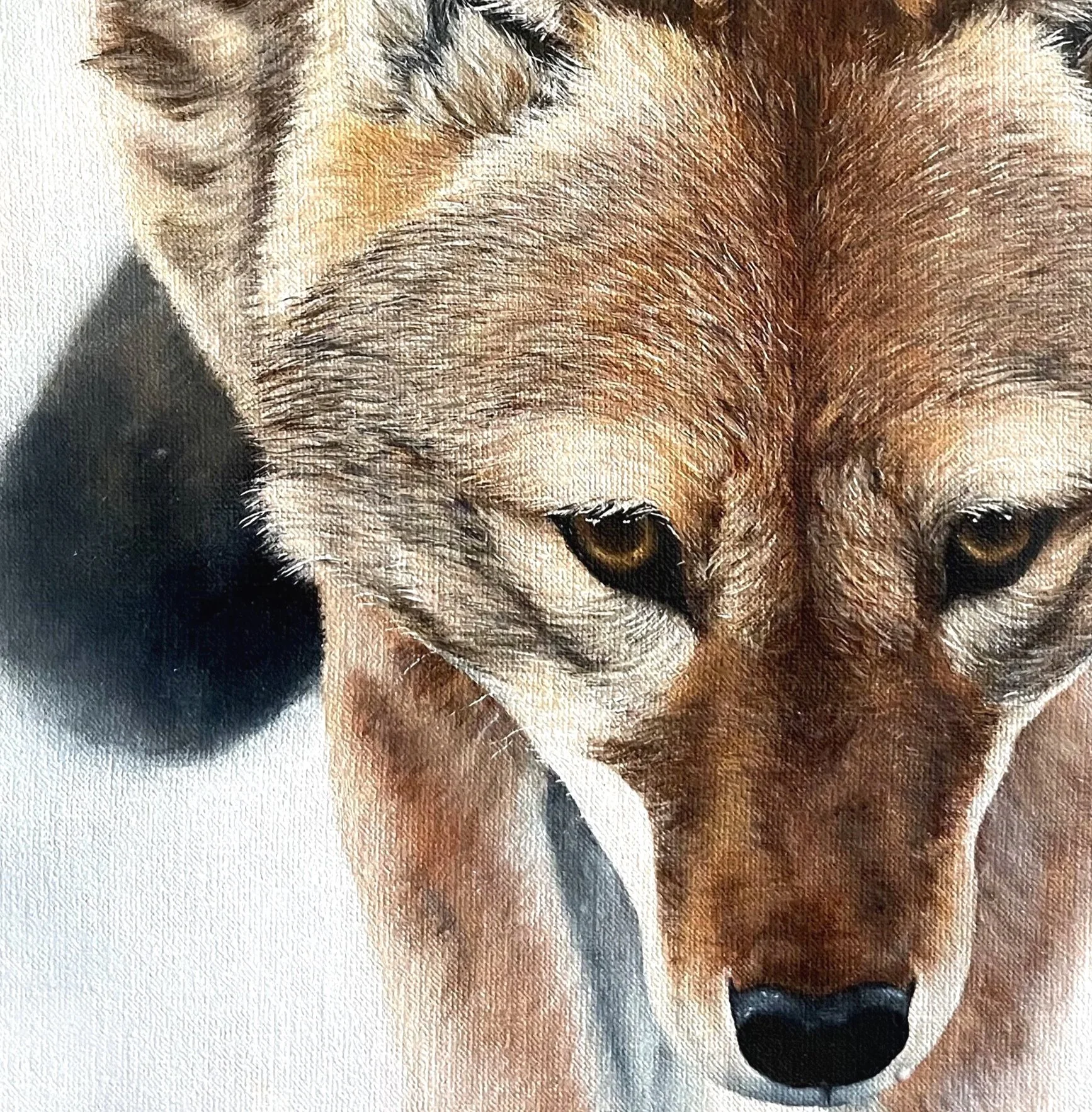
Silent Shadow
ETHOPIAN WOLF
Ethiopian wolves are the only wolf species in Africa, and they are surprisingly social for a predator that hunts alone. Each morning, packs reunite with elaborate greeting ceremonies, running together, touching noses, wagging tails. Then they split up to hunt. They eat almost exclusively giant mole rats, which is why they can only survive in the Ethiopian highlands where those rodents live. Remove the habitat, remove the prey, remove the wolf.
LEARN MORE
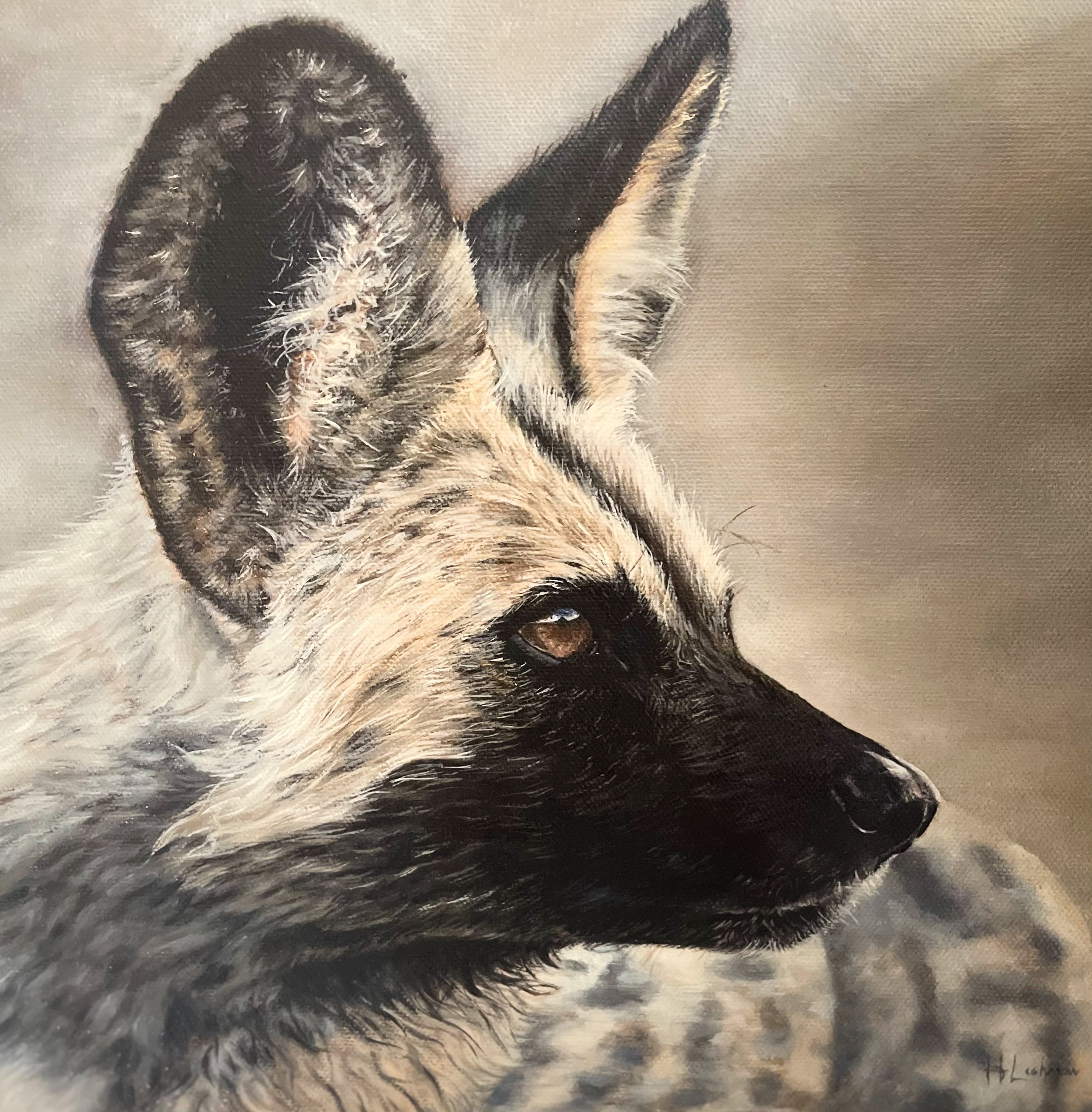
Farewell Cry
African Wild Dog
African wild dogs, also known as Painted Dogs, have the highest hunting success rate of any large predator on Earth. Around 80% of their chases end in a kill. Lions succeed roughly 30% of the time. Yet wild dogs are considered one of Africa's most endangered carnivores, not because they can't hunt, but because they need vast connected landscapes to survive, and those landscapes are disappearing.
LEARN MORE
→ awcf.org
These ten animals are at the heart of my Africa Top 10 series. Ten oil paintings launching at my solo exhibition in Cheltenham, November 2026.
A percentage of all original sales goes directly to conservation charities working to protect them.
To follow the paintings as they're revealed:
Follow @hollylishmanart on Instagram
Art is the lens. Conservation is the reason.
Holly Lishman Art